Agentic Coding – Part 1

Since my first post on agentic refactoring and having attended O’Reilly Coding With AI seminar, I have learnt about a couple of techniques (more like still learning to get good at them), that have improved the results I have had with agentic coding somewhat


Lessons and Takeaways from O’Reilly “Coding With AI” Event

Last week I attended the O’Reilly “Coding With AI – The End of Software Development As We Know It”…so in this quick post I will share my bullet point takeaways, ideas and lessons from that event

Some Observations on AI/Agentic Refactoring

I have been reading, hearing a lot about how AI/vibe coding will make software engineers obsolete and that agentic coding is like magic…so I decided to give agentic refactoring a shot

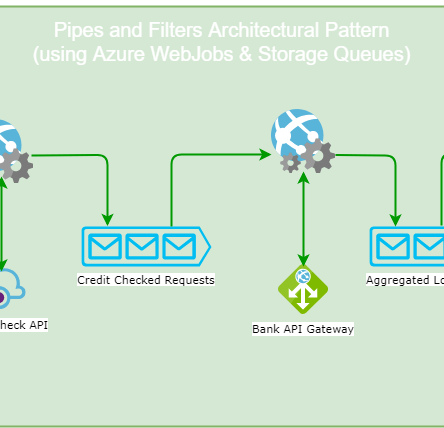
Implementing Pipes & Filters Architectural Style With Azure WebJobs

…the whole business process can be divided into smaller asynchronous sub-processes with each one feeding i.e. “piping” its output into the input of the subsequent process(es). At each stage some processing is done for e.g. data enriching, filtering etc and this processing generically is termed as a “filter”.

Implementing Strangler Pattern using IIS & URL Rewriting for Legacy Systems Migration

Strangler pattern is a way of migrating from legacy applications to new ones with both being operational at the same time and the upgrade happening behind the scenes gradually.

Using Serverless Functions to Build a Microservices Architecture

Seeing as micro-service architectures are all the rage these days, I decided to dip into it by building…

JWT Token Authentication with Cookies in ASP.NET Core

In this post I will show one way to mix JWT Token authentication with cookie authentication using ASP.NET Core and send out the JWT in a response cookie.

Dynamically Mapping Tenant Requests to Tenant Databases in Multi-Tenant Web Applications

In a multi-tenant environment the application database is usually partitioned by tenants. This is done to achieve isolation and scalability. The problem of course is how do you route tenant requests to the correct databases?

Building Domain Driven Architecture in .NET – Part 3 (Repository Design)

In part 2, I talked about my domain modeling thought process so this post is about trying to persist those objects for long term storage. Although the avenue for different … Continue reading Building Domain Driven Architecture in .NET – Part 3 (Repository Design)

Building Domain Driven Architecture in .NET – Part 5 (ASP.NET Core App)

In part 4, I detailed the way I went about creating application services for my expense tracking application. In this final post, I will talk about the ASP.NET Core MVC … Continue reading Building Domain Driven Architecture in .NET – Part 5 (ASP.NET Core App)

Building Domain Driven Architecture in .NET – Part 1 (Overview)

Having read Vaugh Vernon’s book on DDD implementation, I decided to portgrade (port+upgrade) my old clunky Windows based N-tier desktop expense tracking application to ASP.NET Core MVC application using some of the Domain Driven Design concepts I studied in the book.